Software › Ink & Iron Workshop
Writing, Publishing and Audiobook Production
Ink & Iron Workshop
An author’s workspace for developing manuscripts and fictional worlds, preparing eBooks and Web Editions, and producing audiobooks.
Development preview · Alpha
Windows and native Linux
This project is in active development. This page previews current capabilities and development progress. Software and source code are not distributed through this page.
From manuscript to EPUB
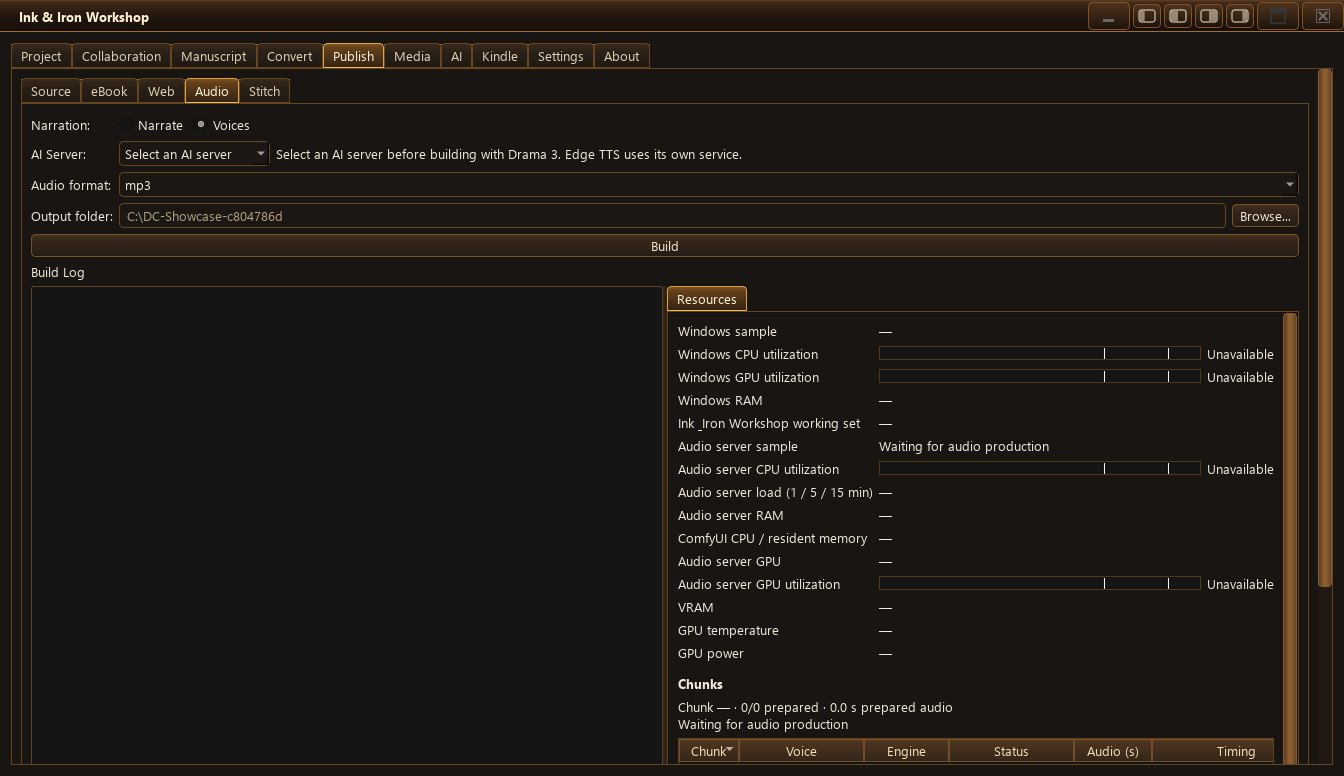
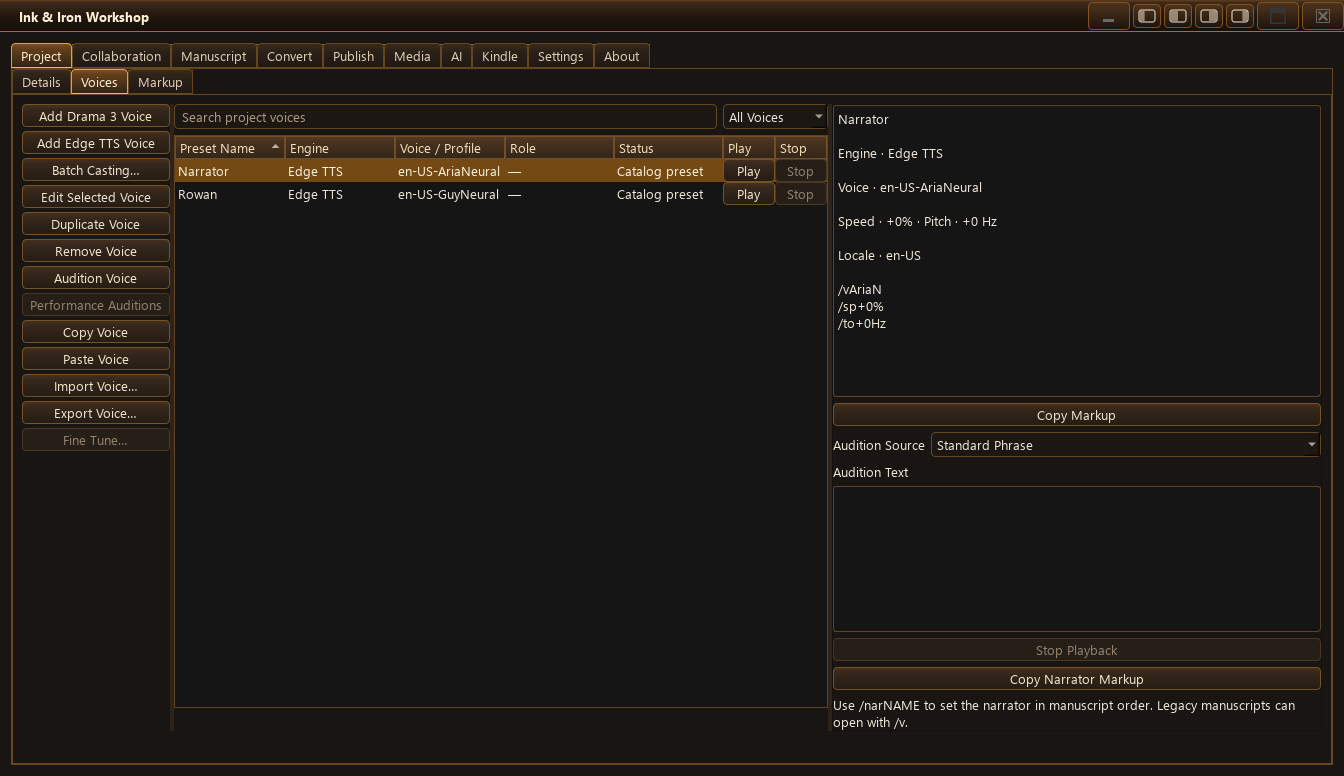
Silent recording of the working application. It opens a demonstration chapter, combines the chapters in Stitch, builds and previews the EPUB, and shows the Audio and project Voices workspaces.
Development walkthrough
This earlier tour, recorded under the eBook Builder name, runs just under six minutes and shows manuscript management, publishing and conversion, AI integration, project knowledge bases, Character Lab, collaboration, and media tools.
Screenshots
Overview
Ink & Iron Workshop brings the working manuscript, background material, character development and publishing into one project. The project references the author’s source files directly. eBook, Web and Audio use the same imported manuscript and book metadata, with independent output settings.
From eBook Builder to Ink & Iron Workshop
It started because I wanted an easier way to put my book chapters together. As I worked on Scars of Order, I was also keeping track of characters, story continuity, and the steps between a manuscript and a finished publication. The first eBook Builder stitched chapters, built eBooks, converted documents, and sent finished files to different destinations.
Working in VSCodium and Visual Studio Code made me wonder what an integrated development environment for authors could look like. I wanted to organize and develop a writing project, track changes, try ideas, and publish the finished work in one place. I kept expanding eBook Builder as those needs came up.
Why the name changed
Ink represents writing, imagination, storytelling, and creativity. Iron represents the engineering, structure, technology, and tools that help turn those ideas into finished work. Workshop describes the place where the author does the creating, with tools available along the way.
The Author’s Integrated Development Environment. Write. Develop. Create. Publish.
Writing and manuscript organization
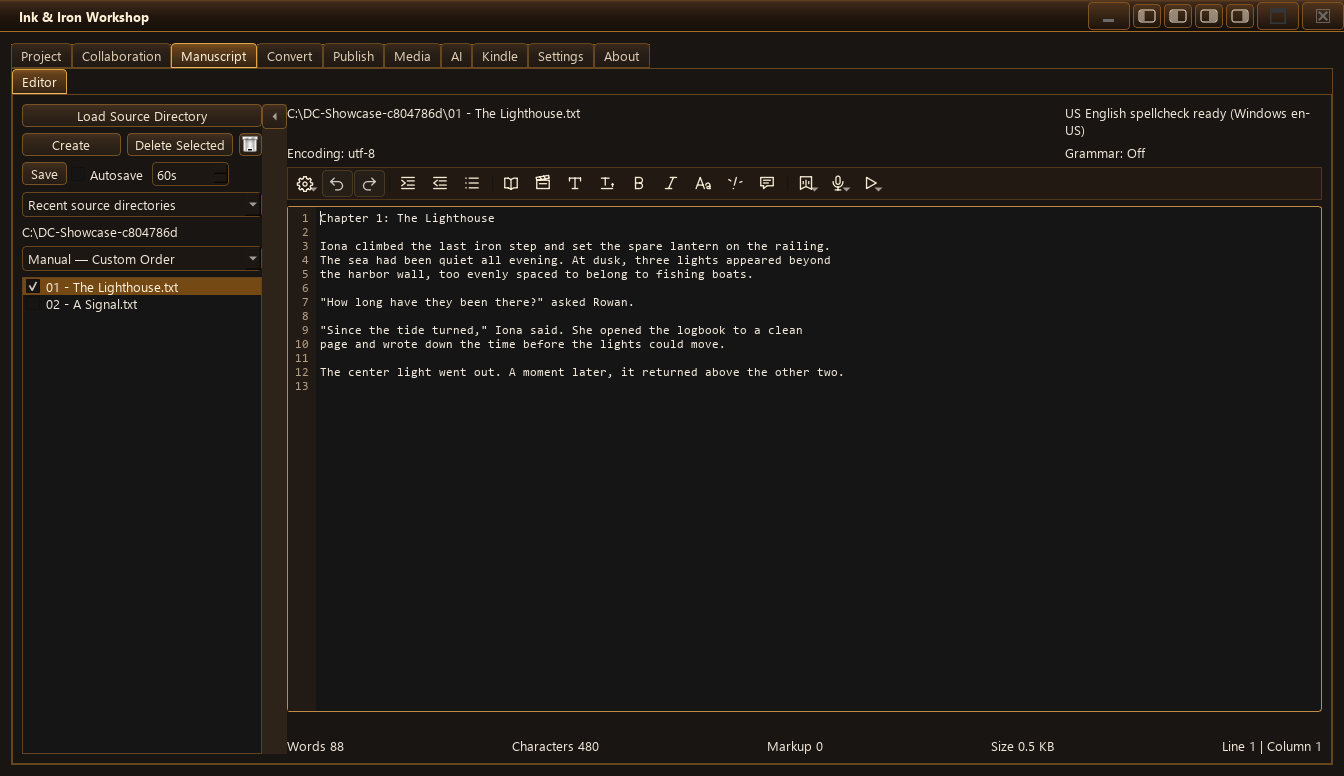
Organize manuscript files in filename or manual order, edit text with spelling and optional local grammar checking, and use Stitch to combine selected chapters. Git tools in the Collaboration workspace let authors review changes and work with project history when the project is in a Git working tree.
Publishing and audiobook production
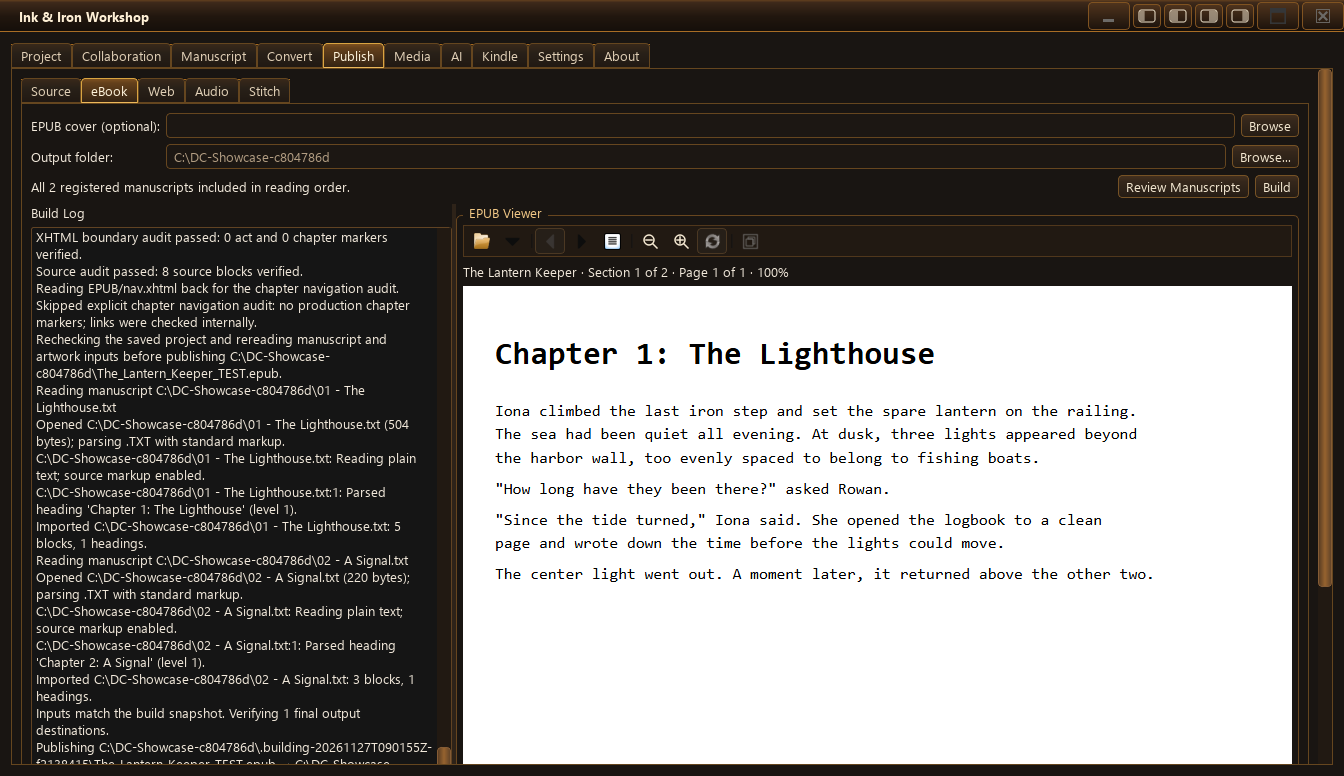
Build EPUB and Web Editions from the shared manuscript, convert supported document formats, or prepare audiobook output in Narrate and full-cast Voices modes. Reusable project voice presets and manuscript cues control voice, speed, pitch, pronunciation and pauses. The Editor can preview selected narration.
The Media workspace provides an audio mixer for combining speech and other audio. Configured generation services support separate sound effects, scoring, and video workspaces.
Project knowledge and AI tools
The AI workspace integrates Codex, Ollama and Space Bunny. Configured connections can use local or network-hosted models. Keeping tools local where practical gives authors more control over their workflow and reduces dependence on internet services and subscriptions.
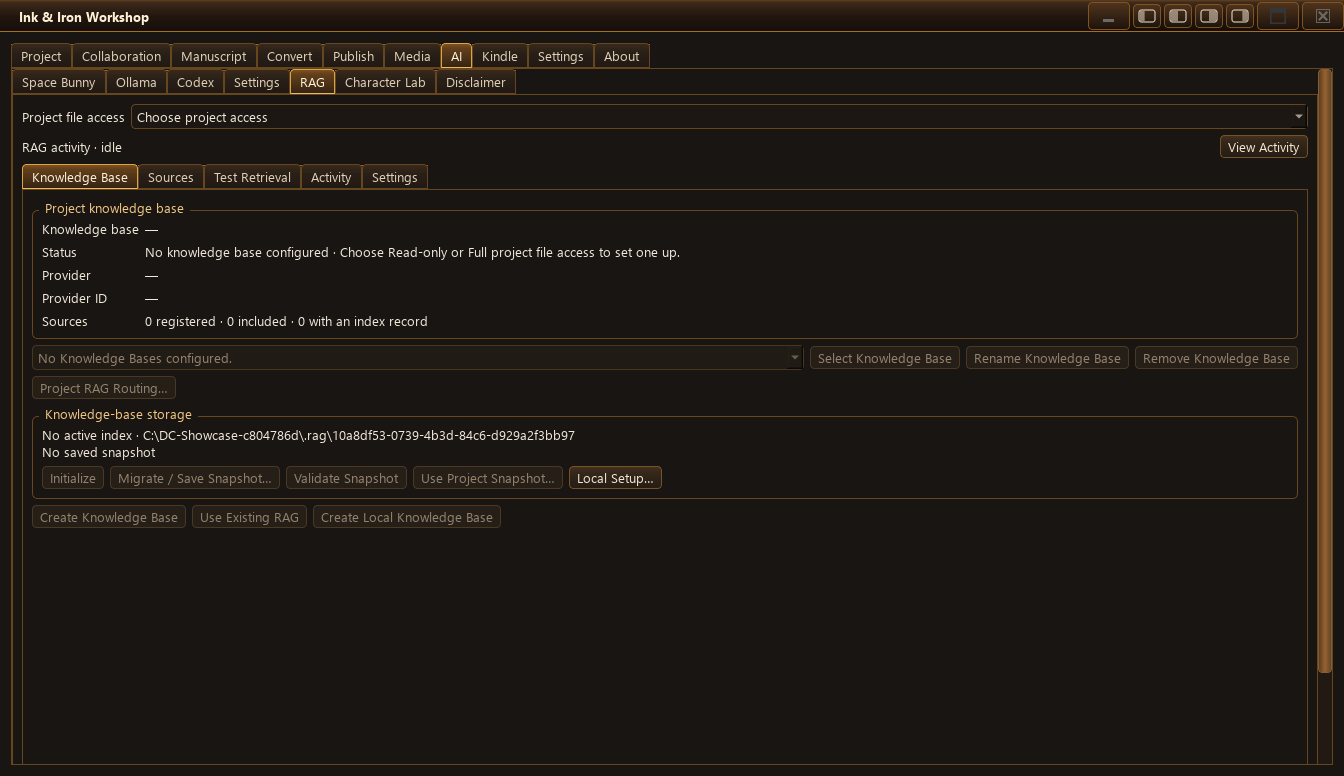
Retrieval-Augmented Generation (RAG) lets authors maintain project-specific knowledge bases from manuscripts, character profiles, worldbuilding notes, and other reference material. They can test retrieval and inspect source references in responses. The author still reviews the results for mistakes and continuity.
Character Lab
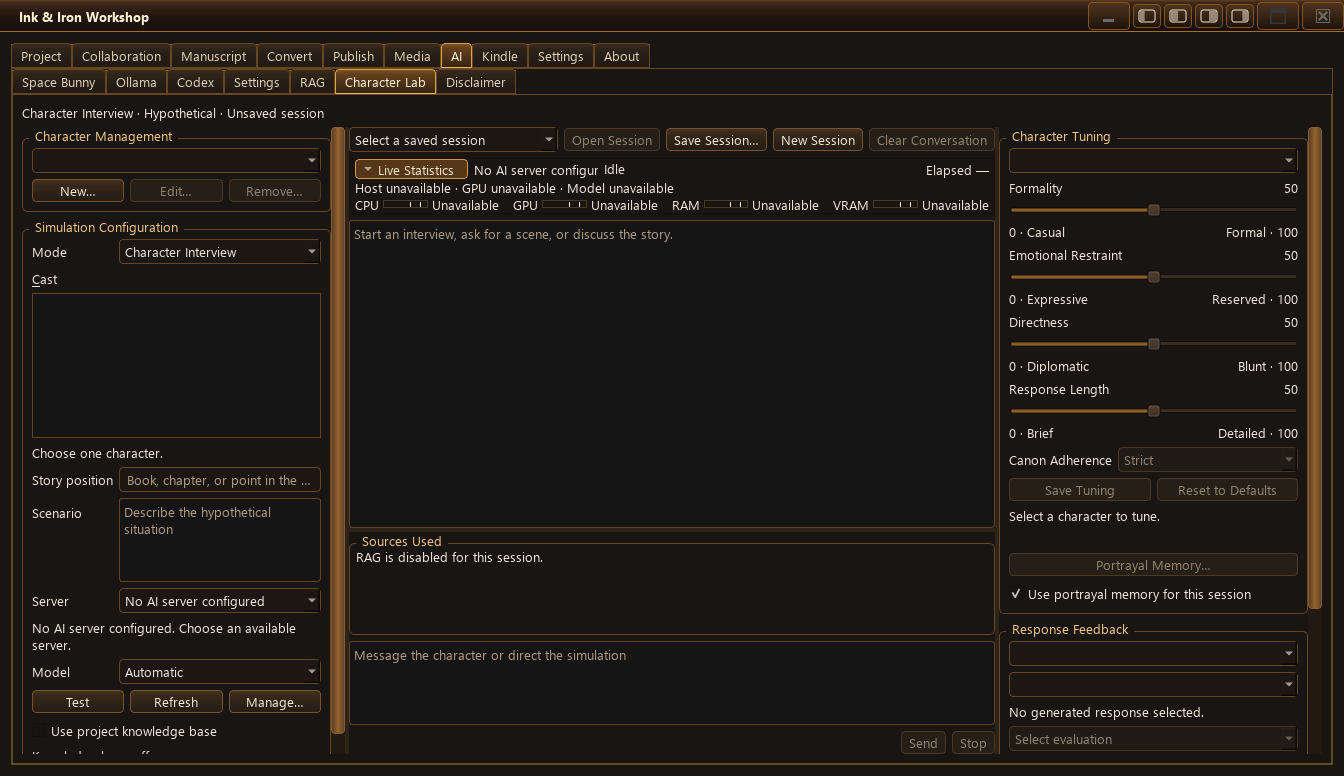
Create character profiles, interview an individual character, put a cast into a hypothetical situation, or direct a scene with project knowledge as canon guidance. Authors can explain when a portrayal misses a character’s voice or history, save that feedback as guidance, and compare a retry with the original response.
Character Lab uses profiles, configurable behavior, project knowledge, and saved author guidance to shape responses. Its sessions give authors a place to explore dialogue and character behavior before deciding what belongs in the manuscript.
The author stays in charge
I use these tools to brainstorm, examine material for continuity problems, test character interactions, and handle technical and publishing tasks. I remain responsible for my stories, characters, creative decisions, and finished manuscripts. I want a workshop that helps me create the novel I actually intend to write.
Development direction
The existing Git and issues workspaces provide a foundation for collaboration. The application identifies messaging, collaborative comments and review, and community integration as future work. The longer-term goal is to bring more of the creative and publishing workflow into the same workspace.
I’m developing Workshop primarily for my own writing and publishing. Suggestions and constructive feedback are welcome. I’m considering donationware as a possible future option, with voluntary contributions and no mandatory subscription. Donations would confer no priority, guaranteed features, individual support, or development schedule. The project remains in alpha, without a public release date.